



QR codes in stores: how to increase sales and attract customers
QR codes in retail are not only a tool for automation, but also a powerful driver of sales growth. They transform packaging, store displays, and advertising media into digital touchpoints and enable direct interaction with customers.
QR codes as a driver of sales growth
Every QR code scan is a transition into a controlled digital environment where purchase decisions can be influenced. Unlike traditional channels, QR codes allow you to measure performance and manage conversion rates.
- increased conversion through instant access to information;
- shorter path from interest to purchase;
- stimulation of impulse buying;
- growth of repeat sales;
- analytics for every interaction.
QR code promotions — a direct tool to influence sales
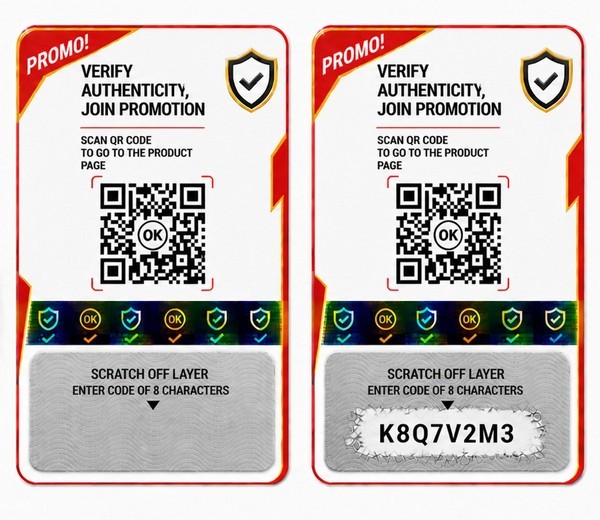
1. QR code + hidden verification code
The customer scans a QR code, lands on a promotional page, and enters a hidden code under a protective layer. This:
- confirms product purchase;
- prevents reuse;
- enables prize draws and campaigns.
Promotional label with QR code and scratch-off verification layer
A promotional label with a QR code and scratch-off protective layer. Used for product authentication, campaign participation, and increasing sales through customer engagement.
2. QR code as an entry point to promotions
The QR code can lead to:
- a promotion registration page;
- instant win mechanics;
- personalized discounts;
- loyalty programs.
3. QR codes for repeat sales
After the first scan, the customer becomes part of an interaction database. Then you can:
- offer repeat purchases;
- send special offers;
- build relationships with loyal customers.
Example: a fully virtual store powered by QR codes
QR codes are used in a South Korean virtual store. Customers scan product QR codes directly from images on display walls and place orders via their smartphones.
This approach significantly increased sales by:
- expanding customer touchpoints;
- moving the store into waiting areas;
- reducing time to purchase;
- improving customer convenience.
In practice, QR codes turned any space into a retail environment.
Notably, the store itself is not located online, but in a subway station. While waiting for trains, customers scan QR codes on life-size product images. After placing an order, it is sent to the store and delivered to their homes. As a result, many Seoul residents avoided standing in checkout lines after work.
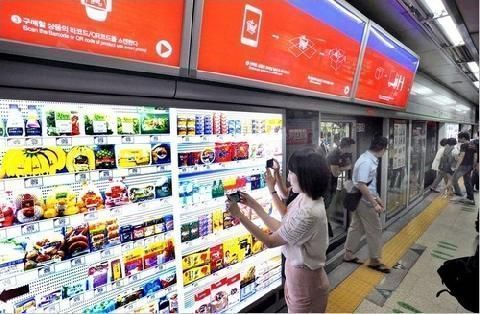
The virtual store in the subway was launched by the second-largest retailer in South Korea — Home plus (a joint British-Korean retail chain created by Tesco, which owns 94% of the business, and Samsung). Realistic images of shelves and products were placed on walls and columns. To order, customers register on the website and install a mobile application.

After installing the app, users can scan QR codes with their smartphone camera and place orders. Just a few minutes — and the products are already on their way.
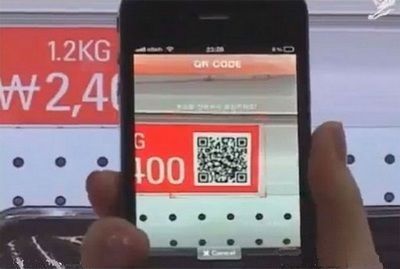
The convenience of this format is that once scanned, products are saved, and repeat orders can be placed from anywhere. This turns QR codes into a постоянный sales channel rather than a one-time tool.
Digital Product Passport
The next stage in QR code evolution is the Digital Product Passport.
Each QR code leads to a unique page for a specific product unit:
- product origin;
- batch and production date;
- quality and certification;
- instructions and recommendations;
- marketing offers.
How Digital Product Passport increases sales
- builds trust in the brand;
- increases engagement time;
- creates a direct communication channel with customers;
- enables personalized promotions;
- drives repeat purchases.
QR codes connect retail, online, and advertising into one buying journey
QR codes bridge offline and online:
- in-store product → online purchase;
- packaging → repeat order;
- advertising → direct purchase entry;
- store display → digital catalog.
This allows businesses to sell not only in-store, but at any customer touchpoint.
Practical implementation scenarios
- QR code on packaging → promotions and repeat sales;
- QR code on displays → extended assortment;
- QR code in advertising → fast purchase access;
- QR code on receipts → customer return;
- QR code on products → Digital Product Passport.
Conclusion
QR codes are not just a technology, but a full-fledged marketing and sales growth tool. Combined with Digital Product Passport, they create a new model of customer interaction and enable business growth without expanding physical infrastructure.
Request implementation
Want to increase your sales using QR codes? Contact Vostok-IT to develop a solution tailored to your business.

Products