



RFID System for Goods, Returnable Transport Items and Material Assets
Unified RFID system for retail businesses: goods, returnable transport items and material assets
For retail and trading companies, RFID should be considered as a unified automatic identification and accounting system that can support several business areas at the same time. At the same time, RFID accounting objects differ significantly in terms of operating logic, lifecycle, environmental conditions and tag requirements.
In practical RFID projects, accounting objects are usually divided into three main groups:
- RFID for goods
- RFID for returnable transport items
- RFID for material assets
All three groups can be supported by one software platform with a shared database, common identification mechanisms, integration with ERP / WMS / EAM systems, mobile terminals, RFID readers and analytics. However, each group requires its own approach to tag selection, attachment method, operational scenarios and cost-effectiveness assessment.
RFID for goods
RFID for goods is primarily used in retail, warehouses, distribution operations and rapid stock counting processes. The main goals are to accelerate inventory procedures, improve stock accuracy, control product movement and reduce losses.
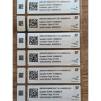
For goods, relatively low-cost RFID tags are usually used because they are applied to a large number of individual items. These may include paper UHF RFID labels, textile RFID labels, combined RFID + barcode + QR solutions and, in some cases, NFC tags for premium or marketing purposes.
Main tasks of RFID for goods:
- fast inventory counting in stores and warehouses
- stock availability control on the sales floor
- faster receiving and shipping operations
- reduction of losses caused by errors and theft
- support of modern retail and omnichannel processes
RFID for returnable transport items
Returnable transport items are a separate RFID accounting category that requires stronger, more durable and more resistant RFID tags. This group includes plastic crates, containers, pallets, specialized logistics containers, carts and other reusable carriers of material flow.
Unlike goods, returnable transport items have a long service cycle and repeatedly move through warehouses, stores, distribution centers, production areas and transport routes. That is why industrial UHF RFID tags in durable housings, plastic-compatible RFID tags, rigid RFID identifiers and protected mounting solutions are typically used for this category.
Main tasks of RFID for returnable transport items:
- location tracking of returnable items
- movement control between warehouses, stores and logistics hubs
- reduction of losses and shortages of returnable transport items
- return control
- automation of logistics operations
RFID for material assets
RFID for material assets is used for fixed assets, low-value assets, equipment, tools, technical devices, furniture, IT equipment and other physical resources of the enterprise. In this case, the key task is not fast turnover or sale, but long-term identification, inventory, movement control and support of operating processes.
Material assets often require specialized RFID tags: on-metal RFID tags, tamper-resistant RFID tags, industrial RFID identifiers and combined RFID + QR / barcode solutions for convenient work both through radio frequency reading and visual identification.
Main tasks of RFID for material assets:
- inventory of fixed assets and enterprise property
- control of asset movement between departments
- assignment of assets to responsible employees
- support of maintenance and repair processes
- creation of a transparent material asset accounting system
One system — different tagging approaches
Although goods, returnable transport items and material assets can be managed within one software system, the RFID tagging approach for each group is significantly different. Goods require low tag cost and high scalability. Returnable transport items require durability, resistance and reliable reading in logistics operations. Material assets require a long service life, resistance to operating conditions and the ability to integrate with EAM, inventory and maintenance processes.
That is why a professional RFID solution for a retail business should start not with choosing a reader or a single tag model, but with analyzing accounting objects, operating conditions, business scenarios and project economics. In practice, the best result is achieved through phased implementation with testing of several RFID tag types on real objects.
Vostok offers RFID tag selection, testing of marking options, solution architecture design and implementation of a unified RFID accounting system for goods, returnable transport items and material assets.
See also

Products