




Radio Frequency Identification (RFID)
Radio Frequency Identification (RFID) is a modern automatic identification technology that enables contactless data collection and processing.
RFID is a contactless technology where radio waves act as the data carrier. The system does not require physical contact with the reader or direct line of sight, unlike barcode systems, magnetic cards, or smart cards. Reliable performance is ensured even in harsh environments and unfavorable climatic conditions.
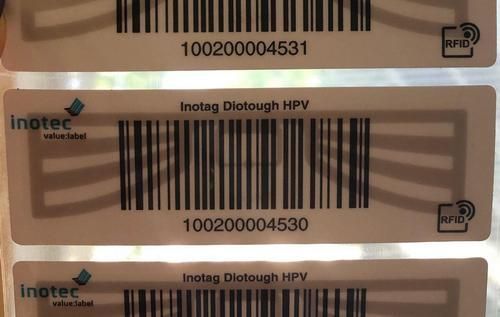
RFID tag is a miniature memory device consisting of an integrated circuit (microchip) for data storage and processing, and an antenna. The microchip stores information, while the antenna transmits and receives signals. Each tag contains its own unique identification number and user data. The reader antenna emits electromagnetic waves, which power the tag. As a result, the tag is activated and transmits information to the reading device. No physical contact or direct line of sight is required between the reader and the tag, as radio signals easily penetrate many materials. Therefore, tags can be embedded inside the objects to be identified.
Embedded placement of RFID tags is typically performed during the manufacturing stage and is widely used in plastic molding — including plastic containers, furniture, and equipment housings — as well as in the production of automotive tires. A tag embedded inside a radio-transparent product receives additional protection and is designed to operate throughout the entire service life of the product.
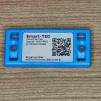
When embedded placement is possible, a combined identification approach has become widely adopted — where the RFID tag operates in synergy with other automatic identification technologies: barcodes, various types of 2D codes, and QR links to digital twins of the object — web-based product passports.
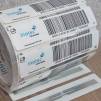
An example of this identification technology synergy is the products manufactured by Inotec (Germany). The company’s manufacturing technology enables individual printing and encoding of each RFID label-tag while ensuring enhanced mechanical durability and resistance to external influences.
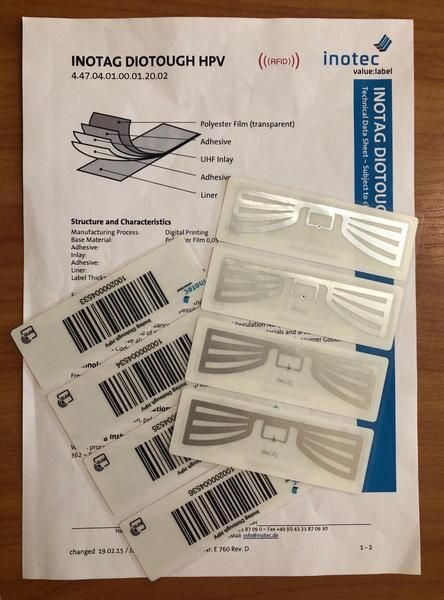
RFID tags can be produced as adhesive labels, plastic housings, or specialized mounting plates. One of the most widespread and key application areas of RFID technology is lifecycle tracking and control of returnable packaging and transport assets. In logistics and manufacturing, these objects generate a significant volume of movements, transfer operations, warehousing, and transportation activities, requiring high identification accuracy and minimal manual intervention.
RFID enables automatic tracking of pallets, containers, crates, specialized industrial packaging, as well as cargo and special vehicles through control points such as gates, portal frames, mobile terminals, and weighing systems. The system records movement events, time, route, responsibility zone, and current object status either without operator involvement or with minimal participation.
Within the lifecycle management of returnable packaging, RFID provides:
- issuance and return control;
- location tracking and movement history;
- repair and maintenance records;
- turnover analysis and loss detection;
- reduction of write-offs and theft.
For transport vehicles, the technology enables automated entry/exit control, monitoring of on-site presence, integration with weighing, warehouse, and production systems, as well as the creation of a complete digital operational history. As a result, enterprises gain logistics transparency, reduced operational costs, improved accounting discipline, and enhanced control over material flows in accordance with modern industrial accounting and EAM system requirements.
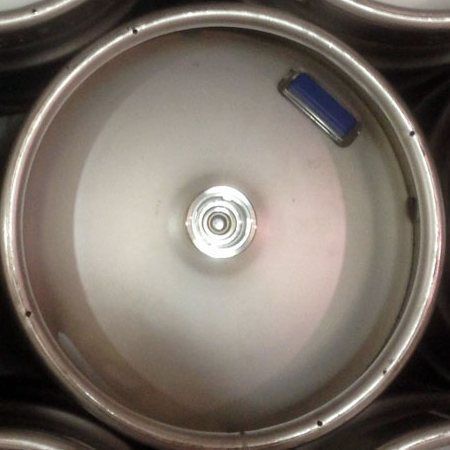
RFID tags contain a unique identification code in their memory. Some tags feature rewritable memory. A reading device (RFID reader) is an electronic device that reads data from tags and writes data to them. These devices can either be permanently connected to the accounting system or operate autonomously. The accounting system is software that collects and analyzes data received from tags and integrates all components into a unified system.
During the design and development of an RFID identification system, marking analytics is a critical stage. It is necessary to select the appropriate RFID tag type, mounting method, and encoding parameters based on operating conditions such as metal presence, humidity levels, temperature ranges, vibration loads, mechanical stress, and aggressive environments.
Properly selected RFID marking must ensure stable read range and accuracy, resistance to radio-frequency interference, secure attachment throughout the entire service life of the asset, and compatibility with the deployed hardware and accounting information system.
An обязательный stage is pilot testing (Proof of Concept) under real operating conditions. The test zone verifies actual read range, resistance to reflections and shielding, correctness of integration with the accounting system, and user convenience for personnel. Based on test results, tag type, placement location, and equipment settings may be adjusted if necessary. Only after confirming stable operation is the system scaled across the entire facility or enterprise.
Vostok specialists will select RFID equipment optimally suited to your task, provide technical consulting support, and, if required, integrate the equipment into a unified comprehensive accounting and control system. You can contact us by phone at +38 068 405-41-11 or by email at vostok@pkf.dp.ua.
Products