



RFID for a store
RFID for a store is a solution for automating product accounting, fast inventory checks, stock control, goods receiving, movement between the warehouse and the sales floor, as well as loss prevention. RFID can be used in clothing, footwear, electronics, cosmetics, book, jewelry, building materials, household goods, grocery stores and other retail formats. RFID systems are used in stores of different formats: grocery, construction, household, furniture, book, jewelry, fashion retail, electronics, cosmetics, auto parts, medical goods stores and other areas of retail trade.
What types of stores RFID is suitable for
- clothing, footwear and accessories stores;
- jewelry stores and stores selling high-value goods;
- electronics and home appliance stores;
- bookstores;
- cosmetics and perfume stores;
- construction and household goods stores;
- DIY and tool stores;
- grocery stores and supermarkets;
- pharmacies and medical goods stores;
- auto parts stores;
- warehouse stores and trading companies with internal logistics.
At the same time, it is important to understand that there is no universal RFID solution that is “the same for everyone”. Each store format has its own nuances: product type, packaging material, storage conditions, service speed, security requirements, sales floor size, warehouse area, number of SKUs, receiving, inventory and sales scenarios.
Why a store needs RFID
RFID helps automate processes that take a lot of time in manual accounting and are often accompanied by errors. Depending on the store’s tasks, the technology can be used for:
- fast receiving of goods on pallets at the loading ramp;
- control of movement between the warehouse and the sales floor;
- operational inventory checks;
- searching for a specific product;
- stock control on shelves and in back rooms;
- creating a coordinate grid of storage and placement locations;
- protection against losses and unauthorized removal;
- acceleration of checkout operations;
- automation of returns accounting;
- identification of expensive, serialized or individual items;
- linking a product to a web passport, movement history or warranty data.
How RFID works in a store
An RFID tag is applied to a product, package or accounting unit. In the accounting system, this tag is linked to a specific product item, batch, serial number or other accounting information.
Reading is performed using RFID equipment:
- handheld RFID terminals;
- fixed RFID readers;
- RFID antennas at the entrance, exit, warehouse or checkout area;
- RFID printers for printing and encoding labels;
- RFID portals for mass reading of goods;
- integration with an accounting system, ERP, CRM or POS software.
As a result, store managers can see incoming goods and stock availability faster, control product movement, reduce accounting errors and speed up regular operations.
RFID for different store formats
RFID can be useful in almost any store, but the implementation scenario depends on the specifics of the business.
Clothing, footwear and accessories stores
For fashion retail, RFID is especially convenient for inventory checks, control of sizes, colors, collections and stock levels on the sales floor. An employee can quickly check the availability of the required model and size, while the store can reduce mix-ups and losses.
Jewelry stores and stores selling high-value goods
In stores with expensive items, RFID can be used for accurate accounting of each unit, control of showcases, movements, returns and inventory. In this case, tag protection, reliable attachment and correct integration with the internal accounting system are especially important.
Bookstores and library stores
RFID allows stores to quickly perform inventory checks, find specific editions, control book movement and automate some checkout or warehouse operations.
Electronics and home appliance stores
For equipment, it is important to track serial numbers, warranty data, batches, комплектation and movements between the warehouse, display area and service zone. RFID can be used together with barcodes, QR codes and digital product passports.
Grocery stores and supermarkets
In grocery retail, RFID requires a particularly careful approach. The result is affected by packaging, the presence of liquid or metal, temperature conditions, the speed of product flow and the economic feasibility of labeling. In such projects, RFID is often used not for all products, but for specific groups: containers, boxes, pallets, high-value items, warehouse units or returnable packaging.
Construction, household and DIY stores
In building materials and household goods stores, RFID can be used to account for tools, equipment, expensive components, warehouse zones, pallets and oversized goods. Here it is important to consider the material of the product and packaging, since metal, foil, liquids and dense stacking can affect reading quality.
Benefits of RFID for a store
- Fast receiving of logistics units. Pallets, boxes, containers. Reading takes place automatically when a logistics unit moves through an RFID portal.
- Fast inventory. An employee can read a large number of goods much faster than with manual barcode scanning.
- Fewer accounting errors. RFID reduces dependence on the human factor.
- Stock availability control. The store can see faster what is located in the warehouse, on the sales floor, in the showcase or in the returns area.
- Product search. An RFID terminal can help find a specific product unit.
- Loss prevention. RFID can be used as part of a product movement control system.
- Faster operations. Receiving, movement, inventory and write-off operations are performed faster.
- Business process transparency. Management receives more accurate data on product movement in automatic mode.
What nuances should be considered before implementation
Before selecting RFID equipment and tags, it is important to analyze the specific store. The project may be affected by:
- store format;
- types of goods;
- type of packaging or containers used;
- packaging material;
- presence of metal, liquid, foil or dense stacking;
- warehouse and sales floor size;
- number of SKUs;
- frequency of receiving and inventory operations;
- need for theft prevention;
- existing accounting system;
- requirements for the checkout area;
- cost of the RFID tag relative to the product cost;
- requirements for label design and placement.
For example, a solution for a clothing store may differ significantly from a solution for a grocery store, building materials supermarket or jewelry salon. Therefore, the right approach is not simply to buy RFID equipment, but first to define the business task and carefully work through the application scenarios.
RFID and barcode: what to choose
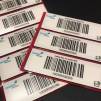
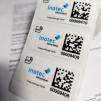
RFID does not always replace the barcode. In many projects, these technologies work together. A barcode or QR code is convenient for visual control, checkout operations, interaction with the customer and printing on a standard label. RFID is convenient where it is necessary to quickly read many objects, automate product movement or simplify inventory.
The optimal solution often looks like this: the product or container has visual marking for staff and customers, as well as an RFID tag for automated accounting.
RFID system components for a store
A typical RFID system may include:
- RFID tags or RFID labels;
- an RFID printer for printing and encoding tags;
- handheld RFID data collection terminals;
- fixed readers and antennas;
- RFID portals or control zones;
- a labeling workstation;
- accounting software;
- integration with ERP, CRM, warehouse or POS systems;
- reports, analytics and operation control.
Cost of RFID for a store
The cost of an RFID project depends on the store format, number of goods, type of tags, selected equipment, integration complexity and the number of processes to be automated.
The price is affected by:
- number of RFID tags;
- type of RFID label;
- availability of printing and encoding;
- number of handheld terminals;
- need for fixed readers;
- integration with the accounting system;
- software development;
- staff training;
- commissioning works.
Therefore, the preliminary cost of an RFID system should be calculated after analyzing the store’s tasks and testing tags on real products.
Stages of RFID implementation in a store
- Task analysis. The processes that need to be automated are defined.
- Selection of labeling objects. Product, package, box, pallet, container or other asset.
- Selection of RFID tags. Tags are tested on real products and packaging.
- Selection of equipment. Terminals, printers, readers and antennas are selected.
- Pilot project. Reading quality and staff convenience are checked.
- Integration with accounting. The RFID system is connected to the existing software.
- Employee training. Staff learn new operations.
- Scaling. The solution is implemented across the entire store, network or selected processes.
When RFID is especially effective
RFID has the greatest effect when a store has:
- a need for fast receiving of pallets from a distribution center;
- frequent pallet-based promotions;
- a large number of SKUs;
- frequent inventory checks;
- expensive or serialized goods;
- a need for real-time stock control;
- mix-ups and manual accounting errors;
- difficulty quickly finding the required product;
- losses during movement between the warehouse and the sales floor;
- a need to speed up goods receiving or issuing;
- plans to automate a store chain.
Conclusion
RFID for a store is a modern tool for automating accounting, inventory and product control. It can be used in retail trade of different formats, but effective implementation requires the right selection of tags, equipment and work scenarios.
Before implementing RFID, it is advisable to test tags on real products and packaging. This makes it possible to check reading range and stability, choose the label placement location and determine the optimal type of RFID tag.
For one store, RFID may be a solution for fast inventory, for another it may be a tool for loss prevention, and for a third it may be part of a comprehensive system for product, warehouse, checkout and customer service accounting.
That is why each RFID project should be considered individually. The store format, product group, packaging, operating conditions and business processes determine what the optimal solution should be.
Frequently Asked Questions about RFID for Stores
Can RFID be used instead of a barcode?
Yes, but in many projects RFID and barcodes are used together. RFID is convenient for fast inventory checks and automated accounting, while a barcode or QR code is useful for visual control, checkout operations and interaction with the customer.
Is RFID suitable for a grocery store?
Yes, but not always for every single product item. In grocery retail, RFID is often used for tracking containers, boxes, pallets, high-value goods, warehouse units or returnable packaging.
Do RFID tags need to be tested before implementation?
Yes. Tags should be tested on real products, because metal, liquid, foil, dense packaging and the tag placement location can affect reading quality.
Can store inventory be performed using a handheld RFID terminal?
Yes. A handheld RFID terminal allows staff to quickly read tags on goods, compare actual stock with the accounting system and search for specific items.
What does the cost of RFID for a store depend on?
The cost depends on the number of goods, the type of tags, equipment, software, integration with the accounting system and the complexity of business processes.
Products