



Library Automation and Book Inventory Management Systems
A modern library is not only a collection of books, but also a digital system for accounting, search, and interaction with readers. Library automation makes it possible to control each copy of a book, speed up service processes, and create a полноценный electronic catalog.
Software solutions for libraries
Library software can be implemented in different formats:
- local accounting systems (installed on library computers)
- cloud solutions (access via the Internet)
- web platforms of the EAM (Enterprise Asset Management) level
The most promising approach is web platforms, as they combine library accounting and a public electronic catalog on a single technological level. This allows working with the system via a browser without complex installation and provides access for readers.
Where library automation begins
Many libraries already have a database in the form of Excel files, tables, or electronic lists. This is a good foundation for transitioning to an automated accounting system.
Using import modules, it is possible to:
- transfer data from Excel and tables into the accounting system
- structure the book catalog
- create electronic publication records
If accounting is maintained on paper (cards, journals), digitization is also possible:
- manual data entry based on existing lists
- recognition of information from book cover photos
- processing images of book spines
To speed up input, artificial intelligence technologies can be used to automatically recognize books and generate records.
ISBN and inventory accounting of books
ISBN (International Standard Book Number) is an international identifier used to identify a publication.
ISBN helps to:
- quickly find a book in catalogs
- automatically fill in records
- synchronize data with external databases
However, ISBN does not replace library accounting. It refers to the publication as a whole, not to a specific copy.
For full library accounting, each book copy is assigned a unique inventory number.
Book identification technologies
Modern libraries use several levels of identification:
- Barcodes — a basic solution for accounting and circulation
- QR codes (web passports) — extended access to book information and interaction with readers
- RFID tags — accelerated inventory, movement control, and asset protection
Each technology has its advantages. In practice, the best result is achieved through a combination, depending on library tasks and budget.
Library accounting automation
Libraries vary by type: national, municipal, private, educational (universities, schools), personal, public, and industry-specific. Today, active digitization of books, journals, and technical documentation is underway. Libraries are increasingly becoming hybrid — combining physical and digital content. Some books are now available only in electronic form.
Library accounting is a set of processes ensuring the recording of actual data about the volume, composition, and movement of the library collection. It includes registration of updates, assignment of inventory numbers, labeling, inventory checks, valuation, restoration, write-offs, and reporting.
The use of modern IT technologies has also impacted libraries. Along with standard accounting tasks (receipt, circulation, inventory, restoration, write-off), libraries face specific challenges:
- inventory takes a long time
- queues for issuing and returning books
- time-consuming search for books on shelves
Key aspects of library automation
Each book is assigned an individual inventory number, stored in the database and linked to a specific copy. Based on this number, barcode and QR labels are generated.
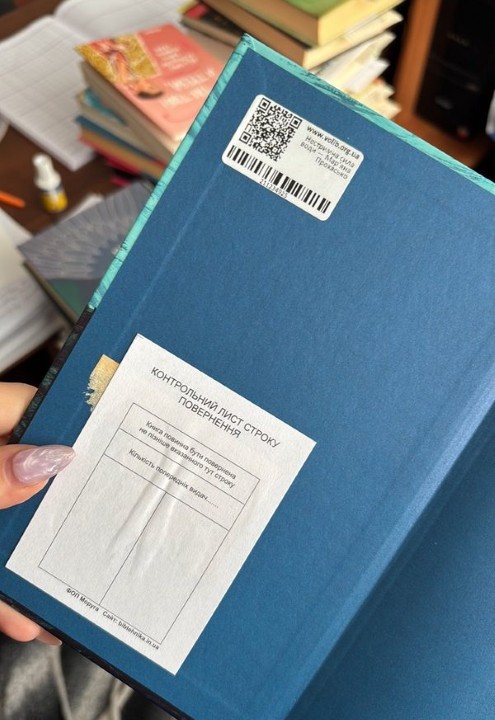
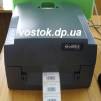
When using RFID, a digital RFID code is assigned to each inventory number. For large libraries, RFID labels can be pre-ordered and applied during inventory. For small libraries, standard printed labels are sufficient using a desktop label printer.
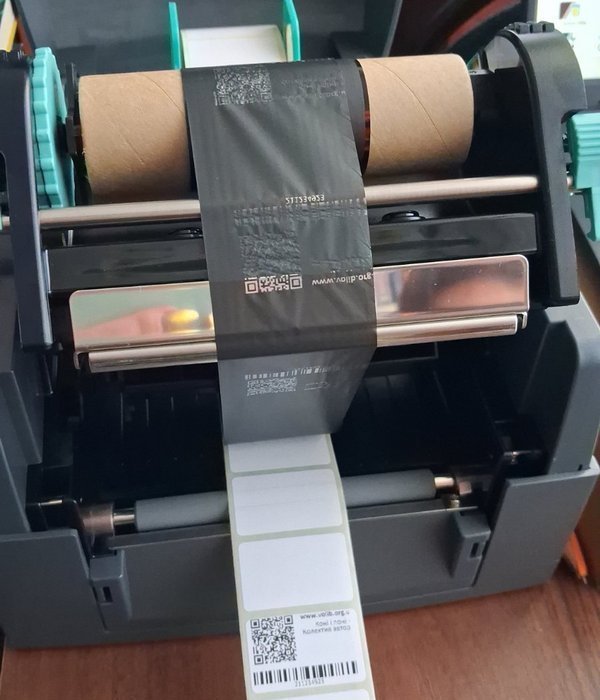
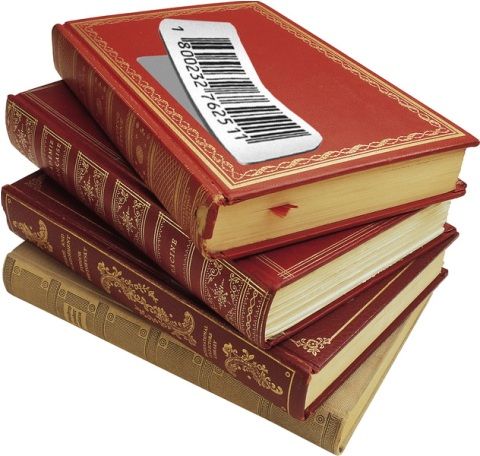
All books are labeled with barcodes containing inventory numbers — this is the basic level of automation. Labeling is performed during inventory or when adding new books.
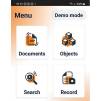
Issuing, returning, and inventory processes are significantly simplified with barcode usage. Librarian workstations are equipped with barcode scanners, and mobile data terminals can be used for inventory. Self-service stations can also be implemented.
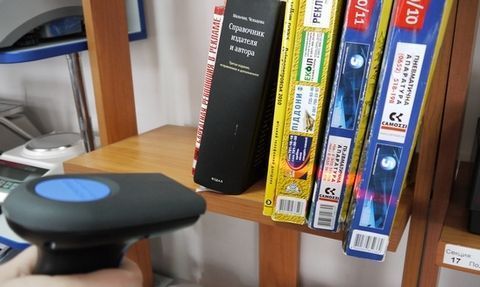
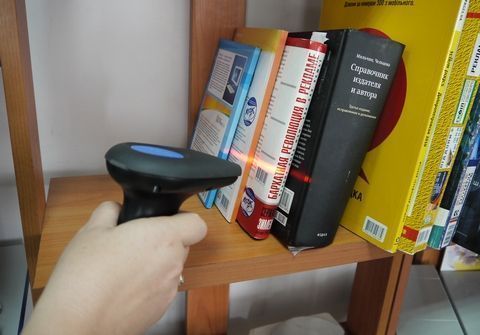
This significantly reduces book circulation time.
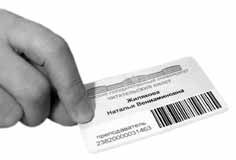
Reader cards can also contain barcodes, allowing identification of visitors, tracking borrowing history, and control of returns.
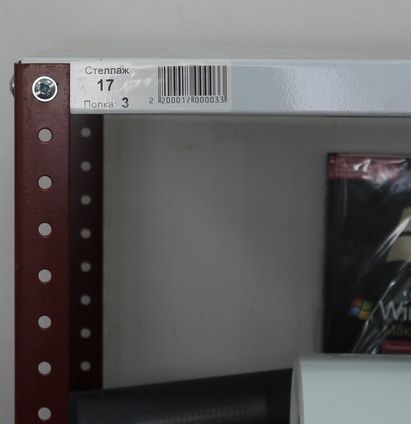
Shelf labeling with address labels improves book placement and search.
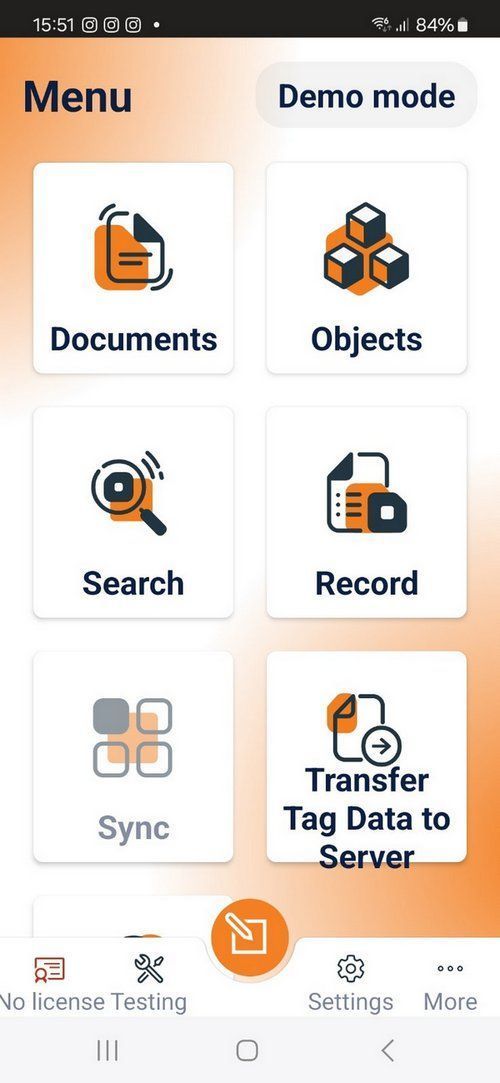
For inventory automation, a data collection terminal is used. Staff scan all book barcodes and compare results with the database.
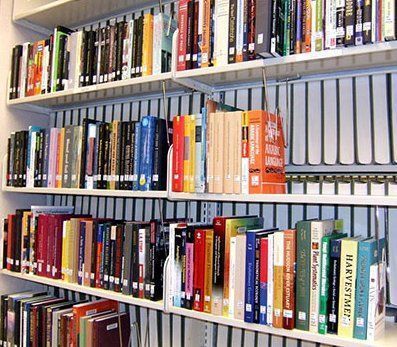
RFID technology provides a higher level of automation. It complements barcodes and enables fast search without line-of-sight scanning.
Digital library and web catalog
Automation enables creation of an electronic catalog with:
- online book search
- availability tracking
- reader interaction via web interface
- mobile integration
Web platforms combine accounting, inventory, and public access in a single system.
Practical benefits of automation
- control of each book copy
- faster issue and return
- reduced accounting errors
- transparent inventory
- modern reader service
Library automation is a step-by-step process — from basic barcode accounting to RFID and digital web passports.
EAM.Webrozum Library Platform
EAM.Webrozum is a web-based platform for library automation that combines book inventory, identification technologies and an online catalog in a single system.
- inventory accounting for each book copy
- barcode, QR and RFID support
- electronic catalog with web access
- integration with scanners and label printers
The system allows libraries to start with basic barcode labeling and scale up to full RFID automation without replacing the platform.
Plan your library digital transformation step by step with EAM.Webrozum.
Send your inquiries to vostok@pkf.dp.ua, via the contact form, or call +38 067 384-69-83.
Products